



Types of Ghrita in Ayurveda Explained: Purana Prapurana and Kumbha Ghrita
Not all ghee is the same, and in Ayurveda, the difference can decide whether it works as food or as medicine.
Ghrita is the Ayurvedic name for medicated or specially prepared cow ghee, classified into distinct types based on how it is aged and stored. The three main types are purana ghrita, prapurana ghrita and kumbha ghrita, each meant for a different purpose, from daily nourishment to targeted therapy for skin and digestion.
Once you understand how these types differ, it becomes a lot easier to see why ghrita holds such a central place in ayurvedic skincare and medicine , and how each form is actually meant to be used.
What Is Ghrita in Ayurveda?

Ghrita is ghee that has been specially prepared or infused for therapeutic use, rather than ghee meant purely for cooking.
The word comes from a Sanskrit root that roughly means to nourish or to make radiant. Classical texts such as the Charaka Samhita go as far as calling it one of the most effective carriers for herbal medicine, and there's a good reason for that.
- Regular ghee is valued mostly for taste and general nutrition
- Ghrita is valued for its ability to carry medicinal compounds deep into tissues
- When herbs are cooked into ghrita, their active properties bind with the fat, which makes them easier for the body to absorb
That absorption factor is really what separates ghrita from the ghee sitting in most kitchens, and it's why Ayurveda gives it a category of its own.
Ghrita Properties: What Makes Ghee an Ayurvedic Medicine
In Ayurveda, ghrita is described as a yogavahi, a substance that carries and boosts the potency of whatever it is combined with.
That's largely why you rarely see ghrita used on its own in classical formulations. It's almost always paired with herbs, minerals or other active ingredients, since its job is to transport their benefits more effectively than they'd work alone.
A few properties explain why it behaves this way
- Its lipid structure penetrates deeper into skin and tissue than most plant oils
- It's said to carry the qualities of fire, water and earth, three of the five elements central to Ayurvedic thought
- It grows more potent and easier to absorb as it ages
That last point matters more than it might seem, because it's the reason ghrita gets sorted into different types in the first place.
Types of Ghrita Based on Age

Ayurveda sorts ghrita by how long it has matured and how it has been stored. Much like certain herbs, it gets stronger with time, and its role shifts from food to medicine the older it gets.
Purana Ghrita: Old Ghee
Purana ghrita is ghee that has aged for at least a year.
- Turns light and penetrating in quality with age, unlike fresh ghee, which stays heavier and sweeter
- Traditionally used for chronic conditions such as epilepsy, certain skin diseases and mental fatigue
- A regular part of panchakarma and other detox therapies
- Works well on dry and sensitive skin as a concentrated natural ghee moisturizer
Prapurana Ghrita: Moderately Aged Ghee
Prapurana ghrita sits in the six month to one year range.
- Falls between fresh ghee and purana ghrita in both taste and potency
- Supports digestion, aids memory and helps lubricate the joints
- Often recommended during recovery from illness, since it restores energy gently
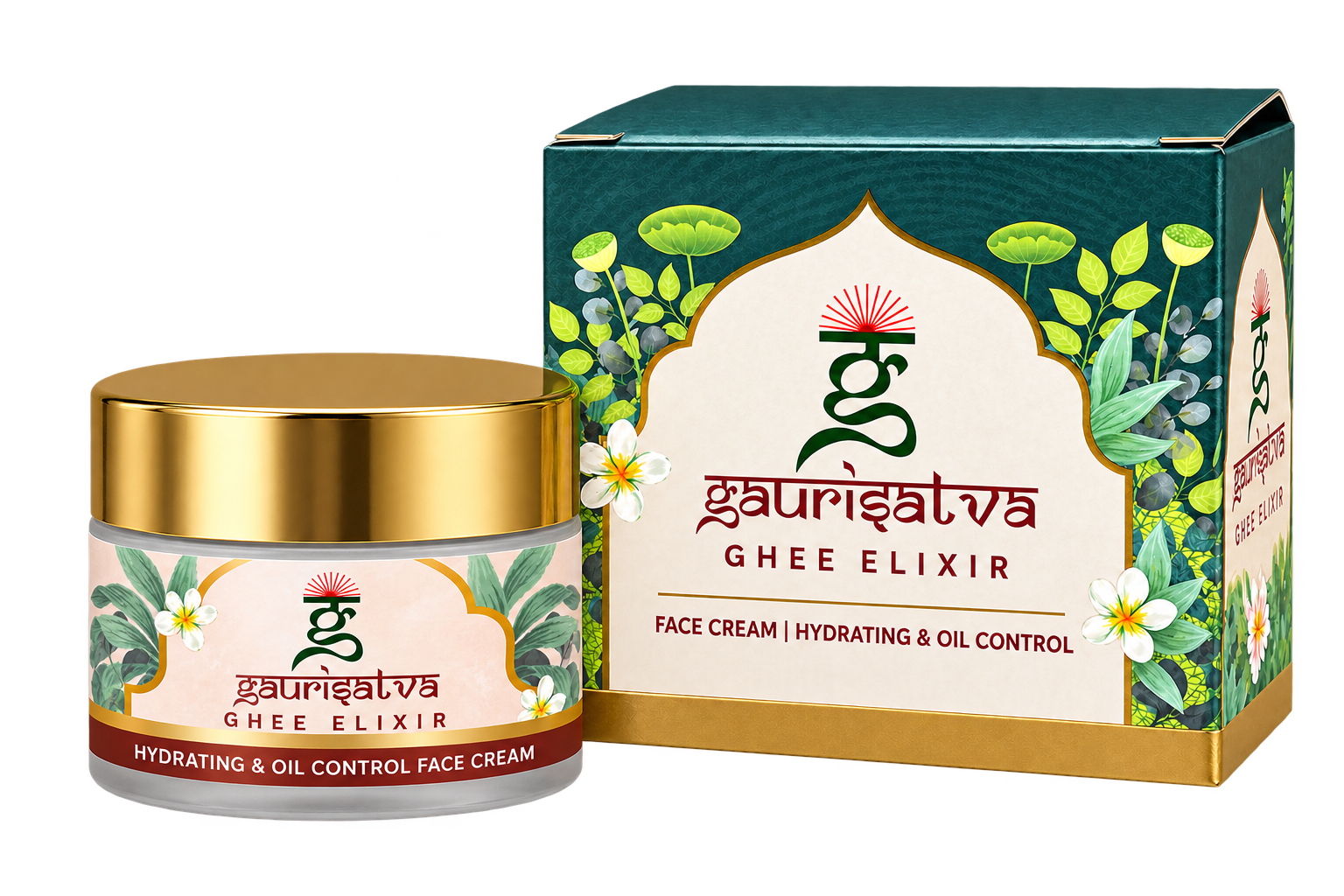
- Blended with nourishing herbs such as ashwagandha infused ghrita in Gaurisatva formulations for everyday skincare
Kumbha Ghrita: Ghee Stored in Clay Pots
Kumbha ghrita is ghee left to sit in earthen clay pots, usually for several months.
- The clay adds mild mineral enrichment and helps keep it from turning rancid
- Considered cooling and grounding, which suits Pitta constitution and hot weather especially well
- Traditionally used to calm inflammation, support digestion and refresh the skin during summer
How Age Changes the Qualities of Ghrita
Aging doesn't just change the taste, it reshapes the texture, aroma and therapeutic effect of the ghee entirely.
- Fresh ghee stays unctuous and sweet, which is exactly what makes it good for food
- Purana ghrita turns light and sharp, better suited for targeted medicinal use
- Kumbha ghrita, shaped by storage rather than age alone, sits somewhere cooler and more balanced between the two
Put simply, fresh ghee nourishes and aged ghee heals. Which one is right depends on what the body actually needs at that point, whether that's daily nourishment, focused therapy or seasonal cooling.
Ghee Uses in Ayurveda- Internal, Topical and Therapeutic Applications

Ghee shows up in Ayurveda in three broad ways: taken internally, applied topically, and used in specialized therapeutic procedures.
Internal Uses of Ghee
- Kindles Agni, the digestive fire, when taken warm before meals
- Supports immunity, particularly prapurana ghrita mixed with warm milk or water
- Works as a Medhya Rasayana, a brain tonic that supports memory and mental clarity
- Eases joint stiffness with regular, moderate use
Topical Uses of Ghee for Skin and Hair
- Ghee is good for the face as a natural moisturizer for dry or sun exposed skin
- Doubles as a lip balm alternative for chapped lips
- Reduces scalp dryness and flaking as a hair treatment
- Serves as a carrier base for herbal skincare, helping actives like saffron, sandalwood or aloe vera absorb more effectively
Therapeutic Uses in Panchakarma
- Nasya therapy uses ghee based nasal drops to relieve sinus congestion and support mental clarity
- Netra Tarpana uses ghee around the eyes to soothe and nourish them
- Purana ghrita, being more potent, is used in panchakarma detox procedures under a practitioner's guidance
Ghrita in Beauty and Skin Rejuvenation
In Ayurvedic beauty care, ghrita is closely tied to Ojas, the subtle energy of vitality, that reflects outward through healthy skin.
Combined with herbs such as saffron, sandalwood or aloe vera, it becomes a moisturizer that locks in hydration while calming Pitta related irritation like redness or sensitivity.
Gaurisatva's Cooling Emollient Cream is built on this same principle. Formulated with aloe vera and sandalwood, it offers a cooling, nourishing effect that suits all skin types, including oily and combination skin, since the ghee base used here is light rather than heavy or greasy.
Why Ghrita Is Making a Comeback in Modern Skincare

Modern skincare is quietly shifting back toward ghee based formulations as more people move away from silicone and mineral oil heavy creams.
- Ghrita doesn't clog pores the way many synthetic alternatives can
- It works with the skin's natural lipid barrier instead of sitting on top of it
- It offers nourishment without leaning on artificial additives or preservatives
This isn't just nostalgia dressed up as a trend. It reflects a real interest in ingredients that are both traditional and functional, and Gaurisatva's Cooling Emollient Cream is one example of that idea applied to everyday skincare.
Frequently Asked Questions (FAQs)
What does ghrita mean in Ayurveda?
Ghrita refers to specially prepared or medicated ghee used for therapeutic purposes, distinct from regular cooking ghee used for taste and nutrition.
What is the difference between purana, prapurana and kumbha ghrita?
Purana ghrita is aged over one year and used for stronger medicinal effects. Prapurana ghrita is aged six months to a year and used for daily nourishment. Kumbha ghrita is stored in clay pots and valued for its cooling, mineral enriched properties.
What are the main uses of ghee in Ayurveda?
Ghee is used internally to support digestion and memory, topically as a moisturizer for skin and hair, and therapeutically in procedures such as Nasya and Netra Tarpana.
What makes ghrita different from regular ghee?
Ghrita's yogavahi property allows it to carry and enhance the effects of herbs it is combined with, along with a lipid structure that helps it penetrate tissues more deeply than ordinary ghee.
Is ghrita based skincare suitable for oily skin?
Yes, when properly formulated, ghrita based creams use a light, non-greasy base that suits oily and combination skin, not just dry skin.
Does kumbha ghrita help with sun exposure and dryness?
Yes, kumbha ghrita is cooling in nature and is traditionally used to calm sun exposed or Pitta aggravated skin while restoring hydration.
Disclaimer: This content is for informational purposes only and is not intended as medical advice. Always consult a qualified healthcare professional before starting any Ayurvedic treatment or remedy.
